 Constructive Voices

The Place Dispatch: Agency Programme
License the series. Keep the client.
Human conversations focused on people and their places
Ongoing reporting that can feature you, your clients, colleagues and local experts
Under the masthead and guidance of an award-winning brand
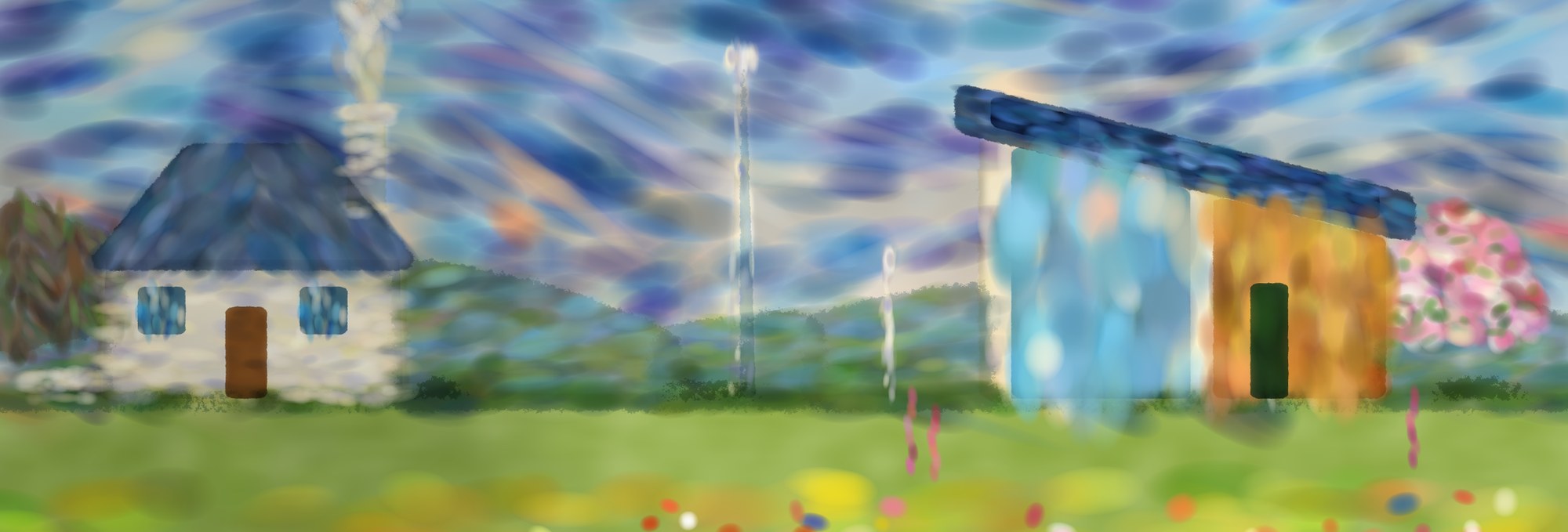
The painting on the card
The Agency Programme lets a digital agency produce place editions of The Place Dispatch for its own clients. You bring the client and the place; we bring the masthead, the method, the editorial gate and the publishing system. What the client ends up with is a record — an episode, an article and the show notes.
What the client gets
One piece of work — four things the client keeps, and can put in front of its own board.
A record, not a campaign
An episode, an article and show notes on a place page that stays live after the campaign budget is spent — and keeps answering the client’s name.
Part of a positive global reporting programme
One series, many places: a growing, constructive record of what is changing in places around the world, told through the people doing the work. Not a doom story, and not a press release.
Aligned to an award-winning brand
Published under the masthead of Constructive Voices — winner of the CIEEM Best Practice Knowledge Sharing Award 2025, and shortlisted in three categories at the Publisher Podcast Awards 2026 and 2025.
Built to be found and quoted
Named people, dated facts and structured data, so search engines and AI answers can find, cite and link the work — with the client named and the agency credited as its producer.
What you license
Not a logo on a page. The three things that make a dispatch worth reading, and worth citing, stay constant whether we make it or you do.
The masthead
A series with a settled definition, described the same way on every page, in every feed and in its structured data. One entity, many places — not a new brand per client.
The making of it
Observation and conversation first, then the article written from it, then the show notes that keep it useful. The same method produces every edition, whoever is paying for it.
The editorial gate
What the agency buys is the right to submit, not the right to publish. Constructive Voices keeps editorial control, because the record has to be worth reading before it is worth citing.
How it works
- Choose the place. The client’s own patch, or a place they want to be known in. A city, a region, a coast.
- Scope the dispatch. We agree the story, the people and the questions with you and the client — one project, street, species, observation or argument.
- Make it. Record and edit it yourself, or bring in a production company: the interview, the article and the show notes are made to the series standard either way.
- Publish into the edition. The article and its place page go on the series, the episode goes into the feed, and the client has a permanent link to point at.
Why this works for search — and for AI answers
Search did not disappear; it moved. People now get answers from engines that summarise, cite and link, and those engines resolve a subject much as a search engine does: one name, corroborated across pages, feeds and structured data. A campaign page stops existing when the campaign does. A record does not.
One subject, not twenty microsites
Every edition resolves to the same series, with a canonical hub, consistent schema and a name described the same way everywhere. Twenty thin sibling sites are twenty non-entities; one series with many places is something an engine can learn.
Three formats per dispatch
An episode in the podcast feed, an article on the site, show notes with sources, figures and names. One piece of work, three ways to be indexed, quoted and followed back to the client.
Place pages for real questions
“What is happening in Cork on water and public realm?” is a query a place page can answer — long-tail, low-competition, and earned only when the record justifies the page.
Built to be quoted
Named people, dated facts, explicit arguments. Answer engines cite what they can attribute; press-release prose is exactly what they skip.
Data a summariser can keep
JSON-LD for pages, articles and breadcrumbs, canonical URLs and one hub. When an engine rebuilds the project into a short answer, the facts it lifts are the ones published here.
The client keeps the asset
Links, citations and the record stay live after the campaign. The agency is credited as the producer of the edition, and the client keeps a page that answers its own name.
No one can promise a ranking. What the format does is remove the reasons an engine ignores a page: no entity, no structure, no attributable facts, no permanence.
Badges and embeds
A dispatch is published on the series. It does not have to stay there: two things travel with the licence, so the client’s own site can carry the work without pretending to be the series.
A mark for the client’s site
A quiet badge for the edition — the client’s name at the top, what it is reporting for and where, and the agency credited as the producer underneath — for a footer, a project page or a proposal. It links back to the dispatch, so the badge is a door rather than a sticker.
The episode, on their pages
The player embeds wherever the client needs it: the project page, a landing page, a newsletter. It plays the same episode from the same feed, so there is one record and no second upload to keep in step.
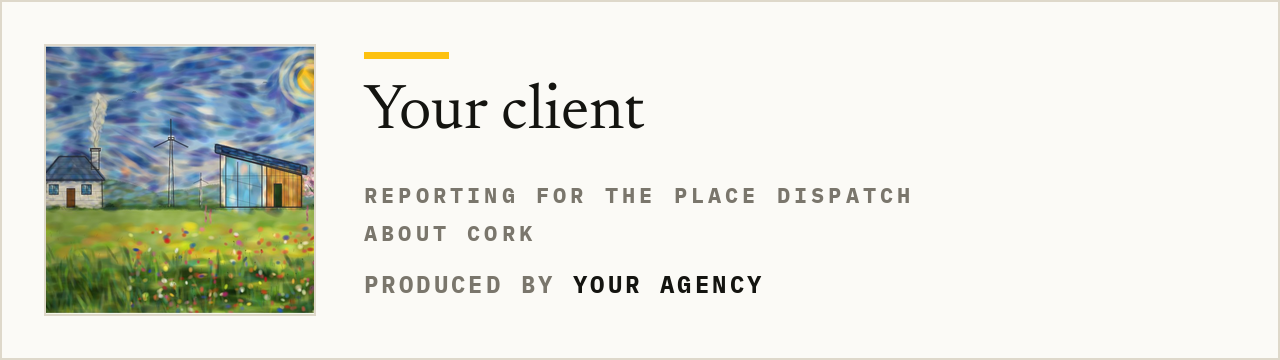
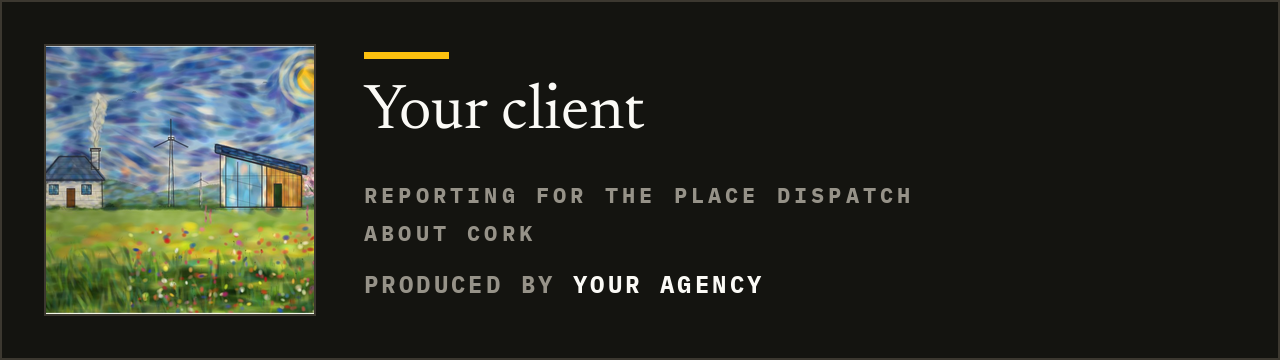
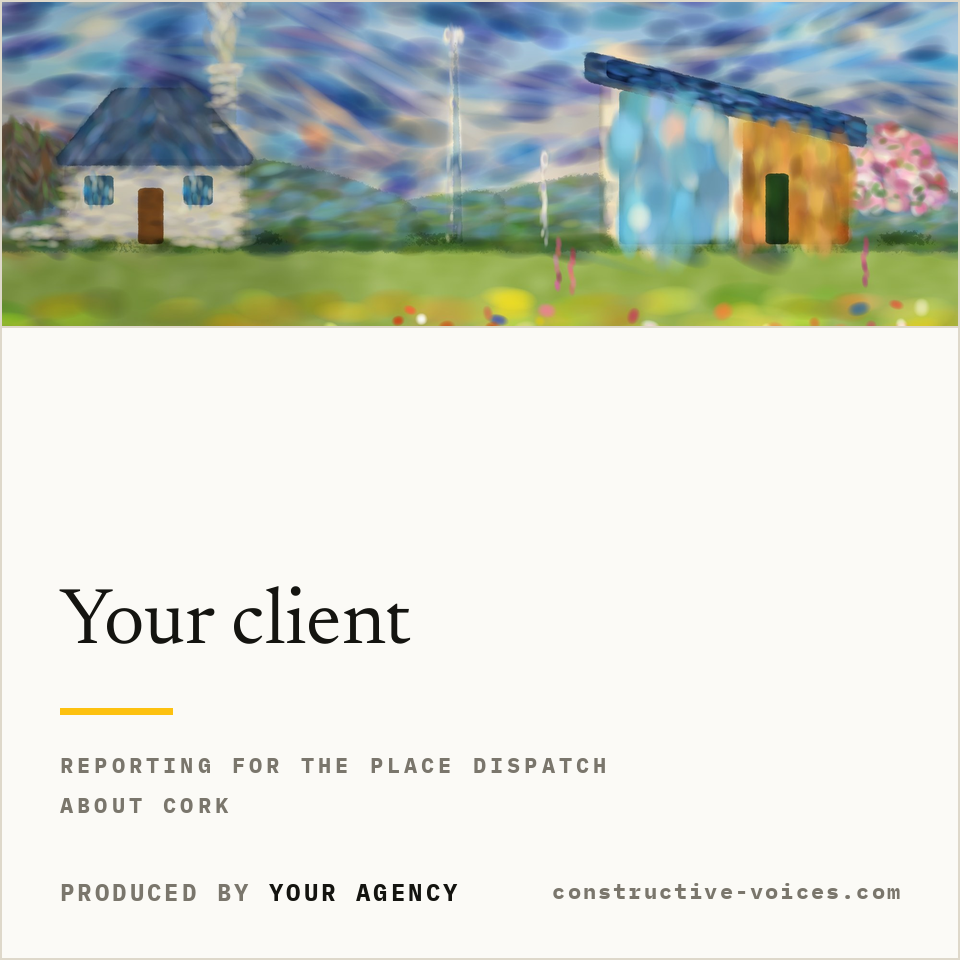
Example badge, shown with placeholder names. Light and dark versions, at two sizes each.
Worked example: Cork
Cork is the first edition, made before this programme existed — so it is the honest sample. One place, one project, three dispatches: the podcast series, the articles and their show notes, all filed on one place page under the series, with the people who made the place named and dated.
What stays with Constructive Voices
- The masthead and the name — the series is not rebranded for a client.
- Editorial control — every dispatch passes the same gate.
- Sponsorship — reserved to Constructive Voices; an agency earns a commission for a sale it introduces, never a share of the asset.
Commercials
One annual licence, one number. Twelve dispatches a year, whoever makes them — the licence does not change if you record them yourself or bring in a production company, and the first conversation is still about the place and the client, not the invoice.
Up to twelve dispatches of up to twenty minutes each. Every one passes the editorial gate and goes on the series, with its article, its show notes and its place page. Hosting, the feed and the publishing system are included.
Added to the year on the same terms. Longer dispatches and multi-part series are quoted separately.
Record the three voices on Riverside or similar and edit it yourself — about €20 a month for the tool. We give you the recording spec and the shape the edit has to hold.
A production company we recommend, or one you suggest and we check. Based on three voices, twenty minutes, and finished video plus audio; the episode page, the upload and the promotion stay at your end, which is what keeps it at that price.
Twelve dispatches, twelve months
€24,000 to the agency — €2,400 to us
Twelve twenty-minute dispatches sold to clients at €2,000 each.
- Clients pay the agency12 × €2,000 = €24,000
- The licence€2,400
- Production, done in-houseyour time, plus about €240 for the tool
- Production, with a partner€8,400–€14,400 indicative
- Left before your own time€21,360 in-house · €7,200–€13,200 with a partner
The first twelve are where the licence earns out; after that it is €250 a dispatch and the same gate. Your client price is yours to set — the arithmetic above is the point, not a rate card.
Try your own numbers
Set the year you think you can sell, your price, and how the work gets made. The licence, the gate and the publishing are the same whichever route you take — and the first twelve dispatches are included.
Agency programme
Bring us a place
Tell us the client and the place they want to be known in. We will come back with what the edition would cover, how it would be made, and which production route suits it.
Prefer email? agency@constructive-voices.com — we answer from the agency desk within one working day.
Questions
Is it white-label?
The masthead stays The Place Dispatch; the edition belongs to the client’s place and the agency is credited as its producer. The point of the licence is that the name means something on every page, which a fresh client brand does not.
Who appears in a dispatch?
The people who know the place — they do not need to be experts in any particular niche. Local knowledge is enough. It might be the client’s team, residents shaping a project, the engineers, planners, ecologists, campaigners etc. The subject is the place, not the client’s press release.
Can the client sponsor the edition too?
Yes — sponsorship is separate and reserved to Constructive Voices, so it is arranged directly with us (the sponsorship programme): one sponsor to an edition, or to a single dispatch within it. An agency earns a commission for a sale it introduces.
Does an edition have to run in the client’s city?
No. An edition is a place, and an agency can produce more than one. The place is whatever the client wants to be known for — their own city, a market they are entering, a landscape their work touches.
The Place Dispatch — series home →
Constructive Voices — winner of the CIEEM Best Practice Knowledge Sharing Award 2025.
Shortlisted in three categories, Publisher Podcast Awards 2026 and 2025.