 Constructive Voices

The Case for Old Growth: Why the Oldest Forests Are Our Best Climate Defence
6/3/2026

When Paul Koberstein and his co-author Jessica Applegate set out to write Canopy of Titans, the project began as an investigation with a deceptively simple question: “What can the big trees of the Pacific Northwest actually do for the climate?”
The answer, drawn out over years of digging, turned the book into something closer to a celebration — and an argument.
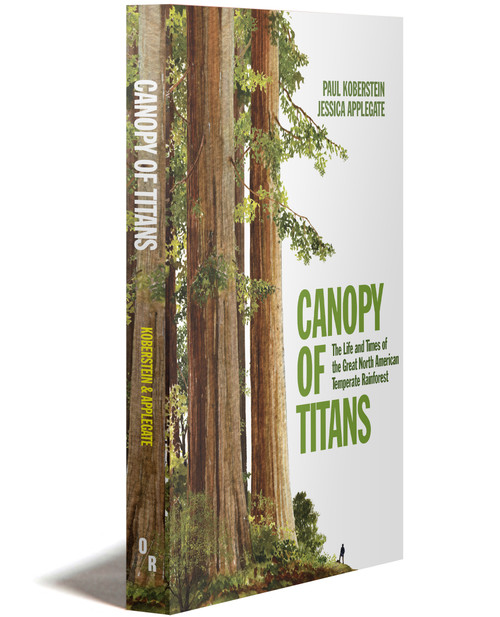
The argument is this. The old forests stretching some 2,500 miles north of San Francisco into Alaska are not scenery, not wilderness set-aside, and not merely a timber reserve. They are among the most effective carbon-storage systems on the planet, and the older and bigger a tree gets, the more carbon it holds and the more it keeps drawing out of the air every single day.
“These are the trees that we should protect,” Koberstein says — “the old trees, the big trees, the trees that store the most carbon.”
That framing matters because the dominant climate conversation is built almost entirely around emissions: stop burning fossil fuels and the problem is solved. Koberstein agrees we must stop burning fossil fuels — but insists that on its own it is not enough.
“If that’s all we do, we’re not going to solve climate change,” he says. “We need to also do something about the legacy of carbon that we put out into the air over the last 300 years. And the only thing that can do that is trees.”
It is a hopeful thesis dressed as a warning. One podcaster told Koberstein he’d picked up the book expecting doom and gloom and instead found a hopeful book, because it is about a solution — a doable one. The machine already exists. It is already running.
“All we have to do is let them complete the job,” he says.
“All we have to do is protect these trees.”
We will still need timber, paper and wood for our houses; those can come from tree farms, of which there are plenty. The ask is narrower and more urgent: leave the existing natural forests standing, and let them keep erasing carbon from the air.
https://youtube.com/shorts/7B3KmMK3IwI?feature=share
Editorial Note:
This article and audiogram were created based on a 2026 interview with Paul Koberstein. This is why he is the credited author.
Transcript
automatically disappear. And they’re they’re investing hundreds of billions of dollars to find this technology. And so far, they’ve been able to remove about one-tenth of one percent of annual emissions, which is not even a drop in the bucket. So a technological solution to climate change is not happening. And we should forget about the idea that it might. But we have a solution that is already here. It’s already doing the work. It needs to be done. And all we have to do is let them complete the job. All we have to do is protect these trees.
We need trees, we need toilet paper, we need h wood for our houses. Fine. We could grow…get that from tree farms, and there are plenty of those around. But the existing natural forests, let them grow, let them continue doing the job of erasing this carbon from the environment from

Latest Episode
S7, E1: When the Building Is Finished With | Earth4Earth